What Folks Don’t Know About Kansas Bumble Bees — And Why It Matters

Most folks talk about bees like there’s only one kind. Truth is, Kansas carries over four hundred native bee species, shaped by this prairie in ways most people never see. And out of all those, more than twenty are bumble bees alone — not one big fuzzy bee, but a whole lineup of native pollinators with their own patterns, colors, and jobs on the land. What people call “a bumble bee” is usually just the one they’ve noticed. The rest stay invisible unless you know how to look. Folks think they’ve got bumble bees figured out. Big, fuzzy, slow, friendly — that’s the picture most people carry. But almost everything they “know” about bumble bees is off by a mile.
The real facts are simpler, older, and tied to the land in ways most folks never hear.
Biggest “facts” people think they know — and don’t
“Bumble bees make honey.” They don’t. They make tiny nectar pots for short-term use, not stored honey. Truth: Only honeybees make true honey, and they’re not native.
“Bumble bees live in big hives.” They don’t. A full bumble colony might hit 50–150 bees at peak. Truth: Small, seasonal nests — nothing like honeybee hives.
“Bumble bees come back every year.” They don’t. The colony dies every fall. Only the new queen survives winter. Truth: One-year cycle, tied to prairie seasons.
“Bumble bees are aggressive.” They’re not. They defend nests, but out on flowers they’re calm and focused. Truth: You almost have to force a bumble bee to sting.
“There’s only one kind of bumble bee.” Not even close. Kansas alone carries 20‑plus species. Truth: Different colors, sizes, behaviors — most folks only recognize one.
A bumble bee colony only lives for one season. That’s the part most folks never hear. The whole nest rises, works, and fades in a single year, and each species runs its own clock. Some queens start early when the prairie is still cold, some wait for the warm-up, some peak in midsummer, and some hold on late into fall. They’re all bumble bees, but they’re not all doing the same thing at the same time.

Bombus impatiens — one of the earliest risers, queens out as soon as the ground warms.
Bombus griseocollis — hits its stride in midsummer, strong workers on sunflowers and prairie blooms.
Bombus fraternus — a Southern Plains native that peaks later and fades fast, tied tight to heat and drought cycles.
Bombus pensylvanicus — once common, now rare, running a long, slow arc through the warm months.
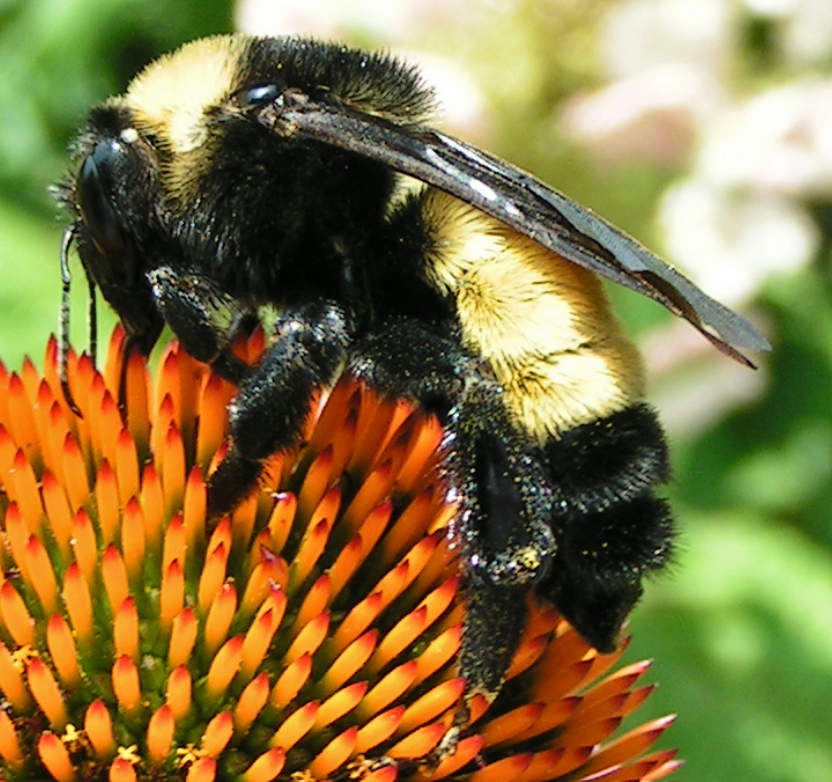
Bombus pensylvanicus
And if anyone saw any one of those species, they’d just yell “bee” or “bumble” and never catch the difference. They don’t know that one bumble queen is up early running her cycle, while another bumble species won’t even start until the heat settles in. What looks like “the same bee” to most folks might actually be one of 20 plus bumble bees, we only mentioned four here, four different natives, each on its own clock, doing its own work on the land.
A bumble colony starts with one queen. She wakes alone in early spring, finds a spot, and builds the first cells by herself. Once her workers hatch, the colony grows fast, running hard through the warm months. By late season, the nest shifts. Workers fade, males appear, and new queens are raised. When those new queens leave, the old colony is already on its way down. By fall, the whole nest is gone except for the young queens heading out to find their own winter shelter. When those new queens leave the old nest, they don’t go far. Each one finds her own winter shelter — a crack in the soil, a pocket under grass roots, a bit of leaf litter, or an old rodent burrow. She tucks in alone, drops her metabolism, and waits out the cold. No colony, no workers, no stored food. Just one queen holding the whole line until spring warms the ground again. How she chooses her winter spot
A queen doesn’t pick her winter shelter by accident. She looks for ground that stays stable — not too wet, not too exposed, not torn up by mowing or raking. A bit of leaf litter, a soft root zone, a quiet soil pocket, or an old burrow is enough. She’s reading the land the same way the land reads the seasons, settling into a place that can carry her through the cold without disturbance.
What happens when she wakes in spring
When spring warms the ground, she wakes slow. First a crawl, then a short flight, then the search for a new nest site. No workers, no help — just one queen starting the whole line over again. She gathers pollen, builds the first cells, and raises the first workers by herself. That’s how every bumble colony begins: one queen, one season, one chance.
All of this circles back to fall. When the land settles, those young queens are finding their winter shelters right under our feet. Every stem left standing, every patch of leaf litter, every quiet corner of soil gives them a place to survive. Fall prep isn’t cleanup — it’s protection. Leaving the land in its natural shape is the one thing that carries these native bees through winter and into the next cycle.


Comments